Czech organisations have taken part in more than 1,500 Horizon Europe projects and have been awarded €772.54 million to carry them out. This total conceals substantial differences between funding areas, institutions and regions: around four fifths of the funding for Czechia is concentrated in just 50 organisations.
Hundreds of Czech organisations have succeeded in European calls for proposals. The projects they contribute to cover basic research, researcher training and mobility, research infrastructure development, health research, environmental protection, and the development of energy, digital and industrial technologies. The October eCORDA data records 2,160 Czech participations in 1,527 projects.
Among the 46 countries included in the international comparison, Czechia ranks eighteenth by number of participations and nineteenth by net EU contribution. A more detailed breakdown shows which areas receive funding, which institutions obtain it, and the role Czech organisations play in leading projects.
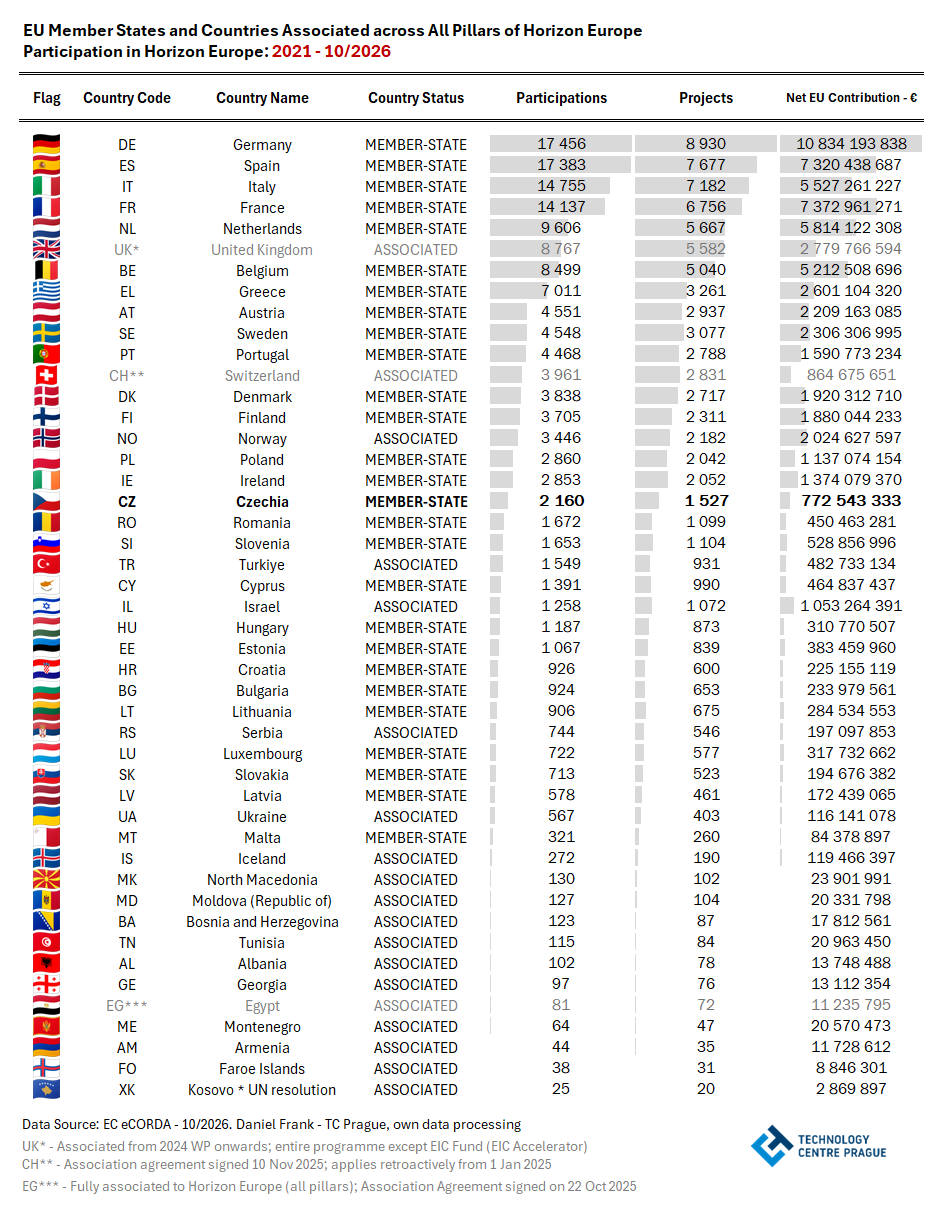
Table 1 – Participation of EU Member States and countries associated to Horizon Europe, 2021–October 2026
Cluster 5 and ERC grants bring the most funding to Czech teams
Czech organisations receive the largest amount of funding through Cluster 5, which covers climate, energy and mobility. Projects in this cluster account for €123.86 million, approximately one sixth of all funding for Czechia. European Research Council (ERC) grants follow closely with €123.15 million. Projects addressing digital technologies, industry and space contribute a further €108.43 million.
Widening participation and spreading excellence, commonly known as Widening, is another substantial source of funding, accounting for €112.34 million. The Marie Skłodowska-Curie Actions (MSCA), which support researcher training, mobility and career development, add €84.05 million. Together, these five parts of the programme account for 71.4% of the funding awarded to Czech organisations.
By number of participations, MSCA ranks first with 539 Czech participations, almost a quarter of the total. Individual postdoctoral fellowships and programmes supporting researcher training and mobility are particularly well represented.
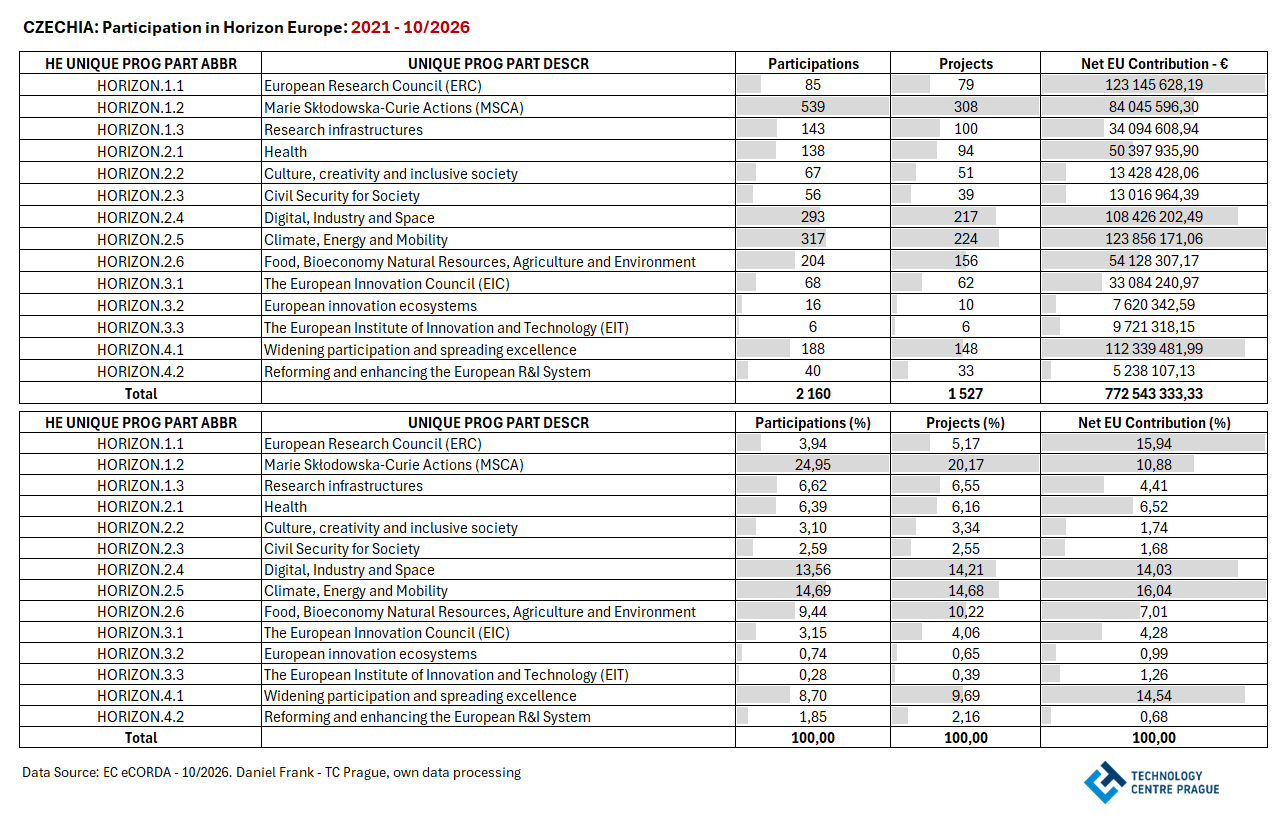
Table 2 – Czech participation by Horizon Europe programme part, 2021–October 2026: numbers and shares of participations, projects and funding
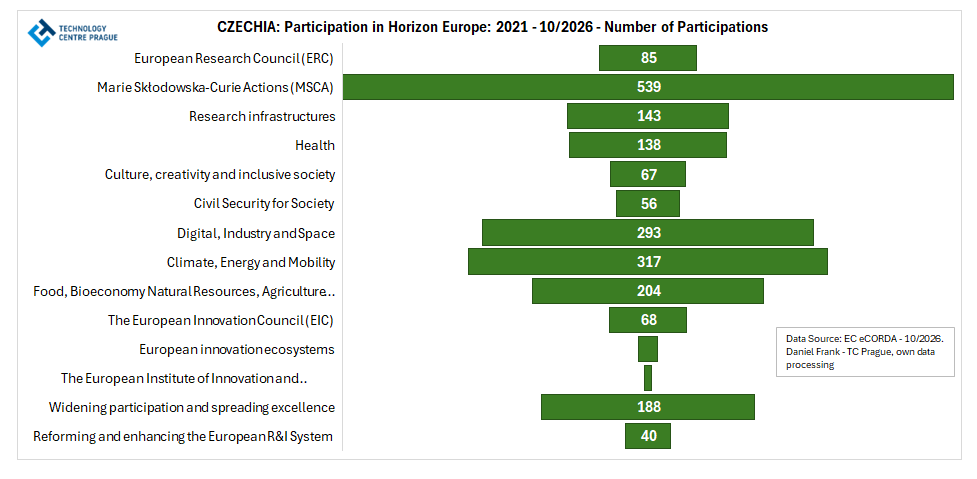
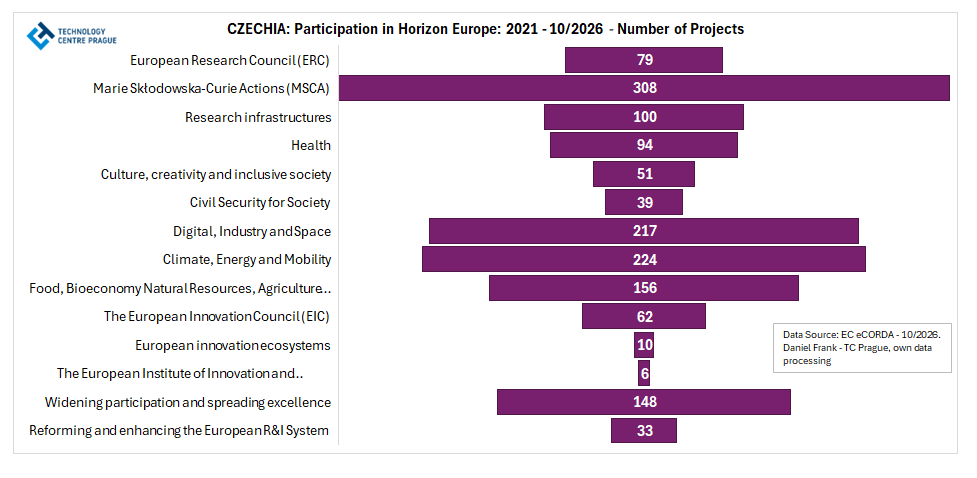
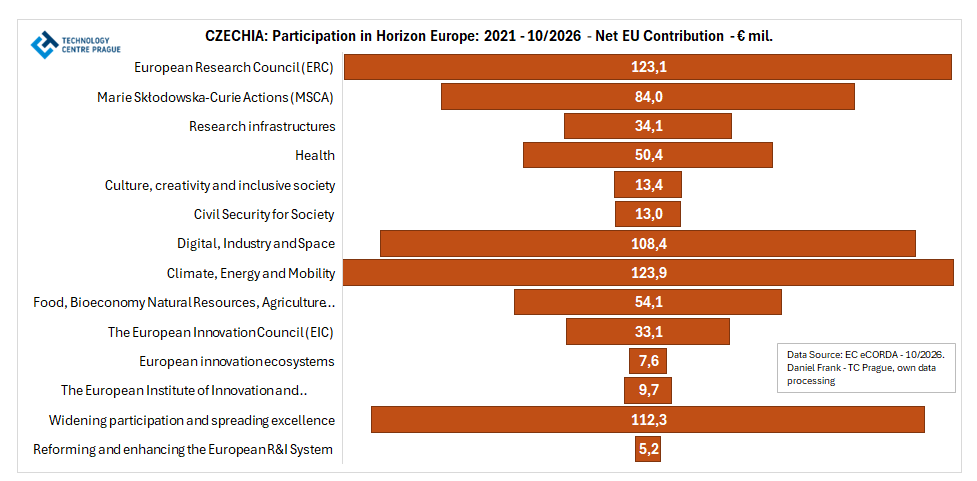
Chart 1 – Czech participation in Horizon Europe priorities and clusters to date: participations, projects and net EU contribution
Widening, health research and research infrastructures feature prominently in Czech participation
The LV4 classification in the eCORDA database provides a more detailed view of Czech participation in Horizon Europe. It combines research and technology areas, funding instruments and the administrative classification of projects.
ERC grants account for the largest amount, at €123.15 million, followed by Widening participation at €101.10 million. Together, they represent 29% of the funding for Czechia. Health research follows with €48.11 million and research infrastructures with €33.28 million. MSCA Postdoctoral Fellowships and the EuroHPC Joint Undertaking account for almost identical amounts: €31.98 million and €31.83 million, respectively. Energy accounts for €30.68 million, transport for €26.09 million, industrial technologies, materials and raw materials for €24.54 million, and climate for €22.68 million.
Among the joint undertakings, EuroHPC is followed by SESAR 3 (€17.87 million), Clean Aviation (€15.16 million), Chips (€12.82 million) and Europe’s Rail (€11.52 million). The breakdown also identifies funding for artificial intelligence and robotics (€6.13 million), quantum technologies (€4.56 million), and projects under the Clean Hydrogen Joint Undertaking (€2.82 million). These areas are not directly visible in the broader cluster-level figures.
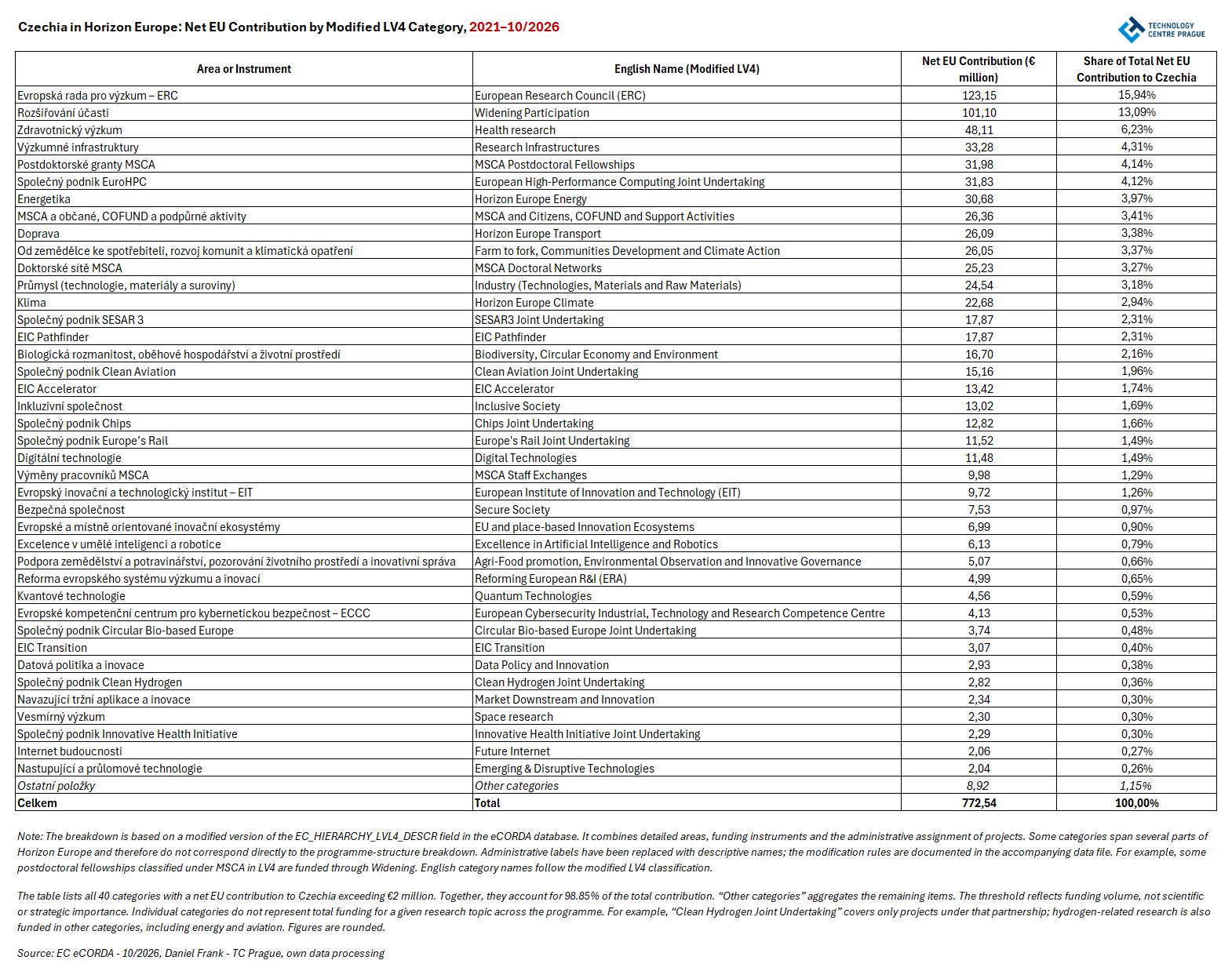
Table 3 – Areas and instruments in the modified LV4 classification with a net EU contribution to Czechia exceeding €2 million
Universities and university hospitals lead among Czech funding beneficiaries
Universities and university hospitals have been awarded €365.69 million, or 47.3% of Czech funding. Private companies account for 20.8%, and institutes of the Czech Academy of Sciences for a further 16%. Together, these three groups receive more than four fifths of the total. At the other end of the scale, public research institutes affiliated with government ministries, outside the Czech Academy of Sciences, account for 0.64%, or just under €5 million.
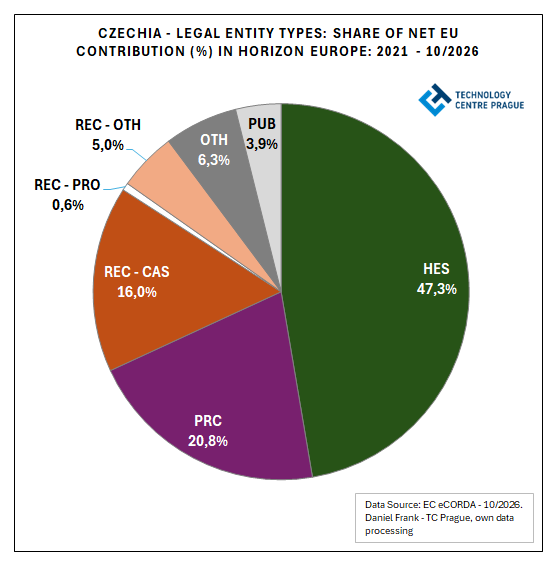
Chart 2 – Share of the net EU contribution by type of Czech institution
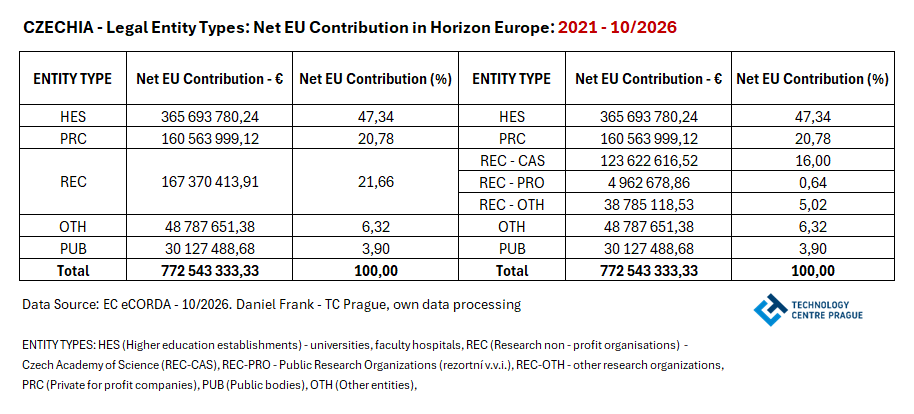
Table 4 – Net EU contribution by type of Czech institution
Prague and South Moravia are the main centres of Czech participation in Horizon Europe
Funding is highly concentrated geographically. Institutions based in Prague and the South Moravian Region account for approximately 77.2% of the funding for Czechia. Prague alone receives €416.25 million, more than half of the Czech total, while South Moravia accounts for another €180.11 million. The Central Bohemian, Olomouc and Moravian-Silesian regions follow at a considerable distance.
The city-level figures show that almost all funding for South Moravia goes to organisations based in Brno, which have been awarded €178.03 million. Prague and Brno are followed by Olomouc (€29.43 million), Ostrava (€28.68 million) and České Budějovice (€16.91 million).
Smaller municipalities hosting major research institutions also feature prominently. Dolní Břežany, home to ELI, receives €10.55 million, slightly more than Plzeň (€10.43 million). Vestec, where the BIOCEV centre is located, receives €6.26 million, marginally ahead of Liberec (€6.12 million).
The Karlovy Vary and Vysočina regions have the lowest shares, at 0.058% and 0.039%, respectively. This geographical breakdown is based on recipients’ registered locations. It does not show every place where research takes place or where its results may be used.
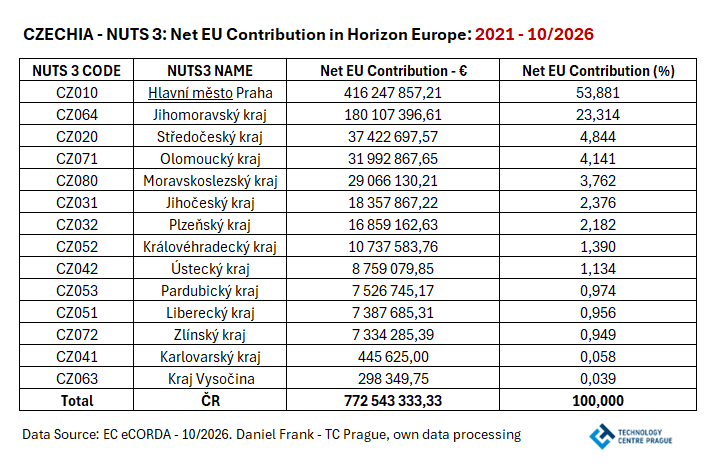
Table 5 – Distribution of Czech funding by the region in which recipients are based
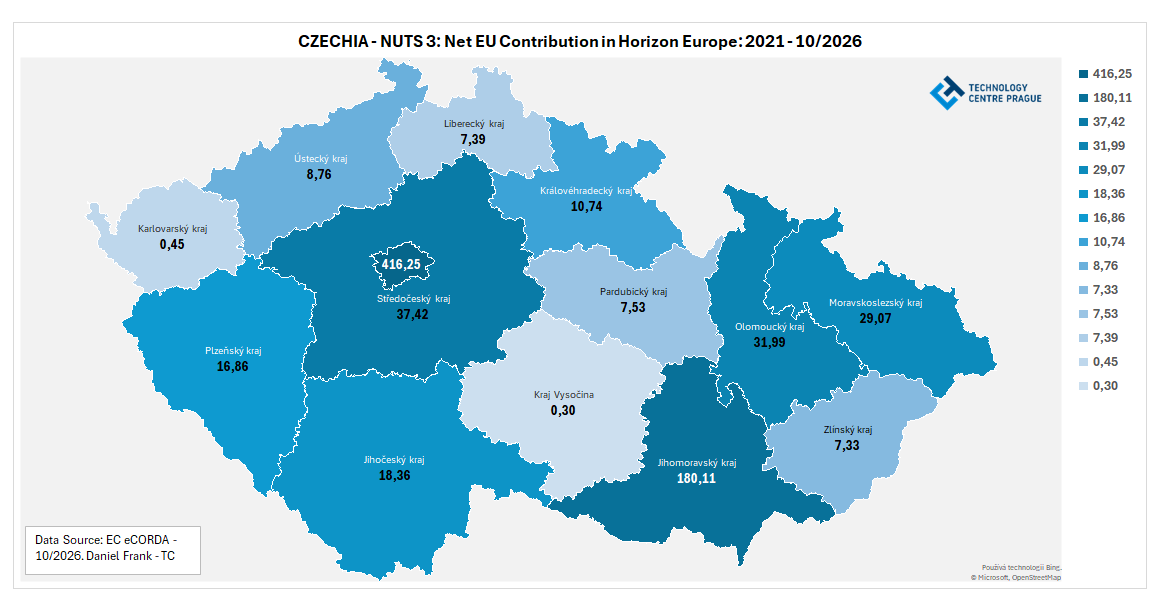
Map 1 – Net EU contribution by Czech region, € million
Research and Innovation Actions account for the largest amount of funding
Czech organisations receive the largest financial contribution through Research and Innovation Actions (RIA), which account for €192.10 million. Coordination and Support Actions (CSA) contribute a further €117.73 million, while the three main ERC grant schemes—Starting, Consolidator and Advanced Grants—account for €98.61 million. ERC Synergy and Proof of Concept grants are listed separately.
RIA also leads by number of Czech participations, with 618 across 467 projects. Together with Innovation Actions (IA) and the corresponding RIA and IA actions under joint undertakings, they account for 47.2% of the funding for Czechia. Alongside these predominantly collaborative projects, MSCA European Postdoctoral Fellowships are also well represented, with 179 Czech participations in 173 projects.
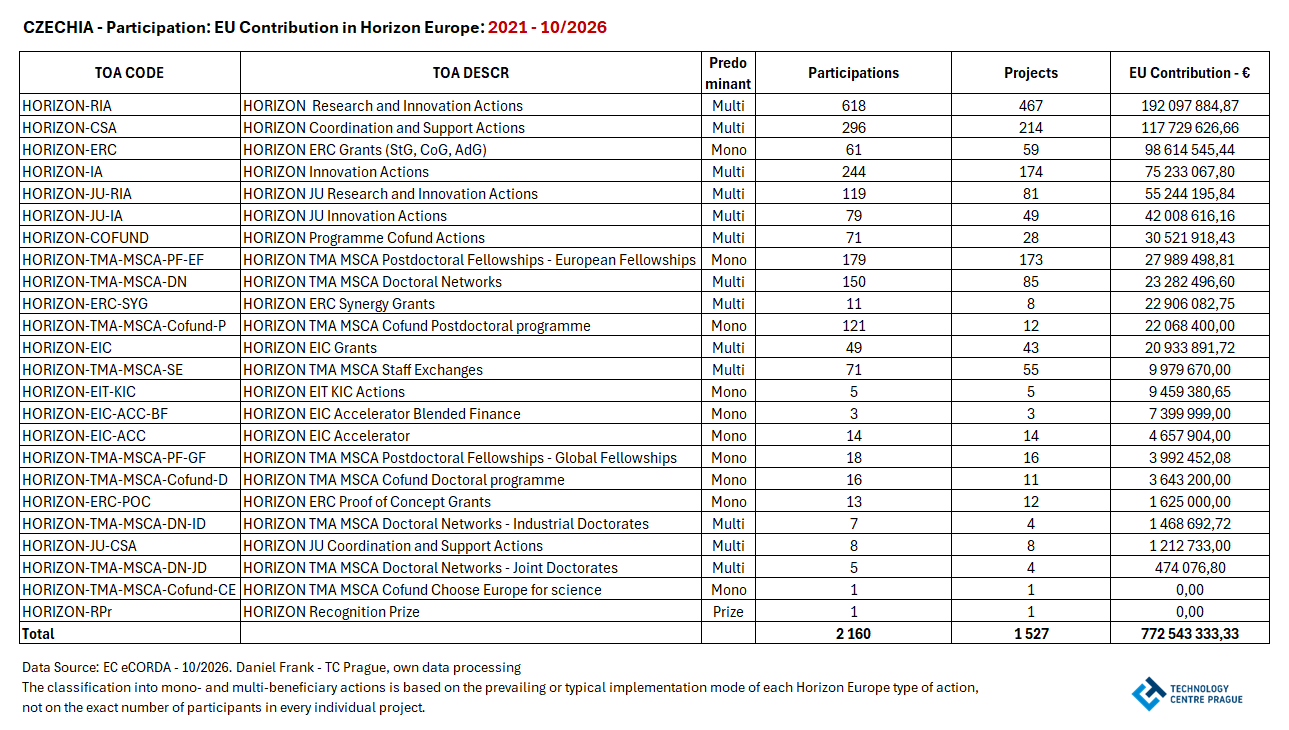
Table 6 – Czech participation in Horizon Europe by type of action
From individual grants to coordinating international consortia
The figures for Czech coordinators include both individual grants and projects carried out by international consortia. The former typically involve a researcher and their host institution; the latter require the management of cooperation between several organisations. These roles need to be distinguished when assessing Czech leadership in projects.
Individual actions account for 252 projects with a Czech recipient recorded as coordinator and €164.71 million. ERC grants and Marie Skłodowska-Curie Actions are the most common. In predominantly collaborative types of action, Czech organisations lead 126 projects. The financial contribution is nevertheless almost comparable: Czech organisations leading these projects receive €148.63 million. The overview also includes one prize with no financial contribution.
In total, Czech coordinators have been awarded €313.34 million, or 40.6% of all funding for Czechia. This amount covers contributions to the Czech coordinators themselves, rather than the budgets of entire consortia. MSCA European Postdoctoral Fellowships account for the largest number of projects in this overview. Among predominantly collaborative types of action, CSA leads with 68 projects coordinated from Czechia, compared with 26 RIA projects.
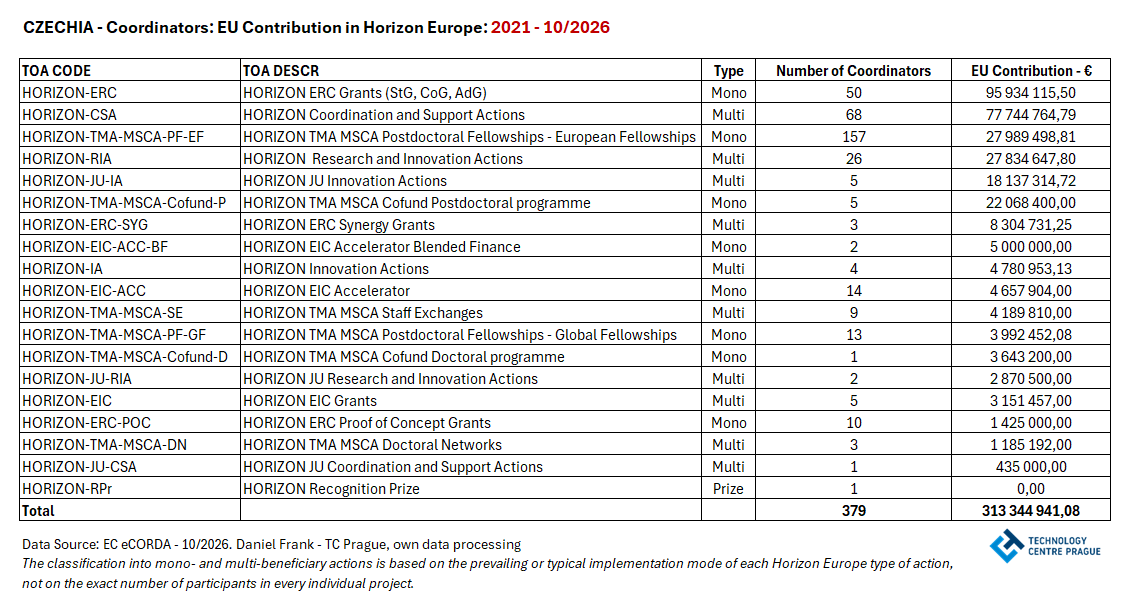
Table 7 – Projects with Czech coordinators and EU contributions to those coordinators, by type of action
Ten institutions receive almost half of Czech funding
Hundreds of Czech organisations participate in Horizon Europe, but funding is concentrated among a relatively small group of recipients. The 50 organisations with the highest net EU contributions have been awarded a combined €619.61 million, or 80.2% of the funding for Czechia. The top ten account for almost half of the total.
Masaryk University leads with €78.34 million, followed by Charles University with €73.76 million. Together, they have secured almost one fifth of the funding for Czechia. Universities occupy the first seven places. Honeywell International, Codasip and the Institute of Physics of the Czech Academy of Sciences complete the top ten.
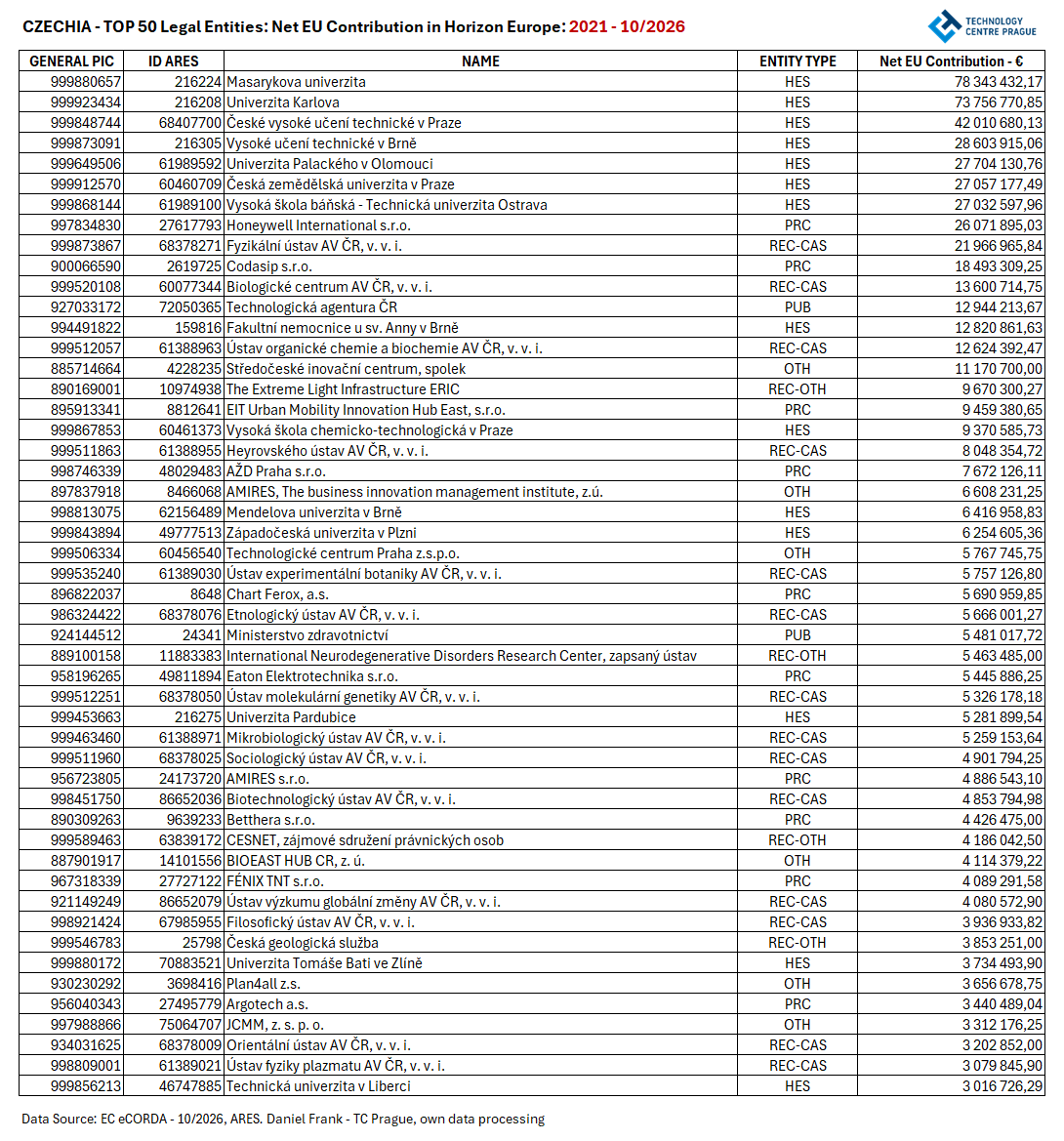
Table 8 – The 50 Czech institutions with the highest net EU contributions from Horizon Europe
Czech participation in Horizon Europe spans a wide range of research areas and forms of cooperation. Most funding, however, is concentrated in a limited group of institutions and two main centres: Prague and Brno. Technology companies feature among the leading recipients alongside universities and institutes of the Czech Academy of Sciences. Assessing these results requires a distinction between participation in projects, funding awarded, and leadership of international consortia. Each measure captures a different aspect of Czechia’s involvement in the programme.
Author: Daniel Frank, TC Prague, frank@tc.cz, 2 November 2026
This article, or any part of it and its accompanying materials, may be published or shared in Czech or any other language only with appropriate acknowledgement of the source and author, in accordance with standard citation practices. Any changes other than purely formal adjustments require the author’s consent. The text has not undergone language editing.